Building Intelligence Two U.S. patents allowed
Building intelligence, unified.
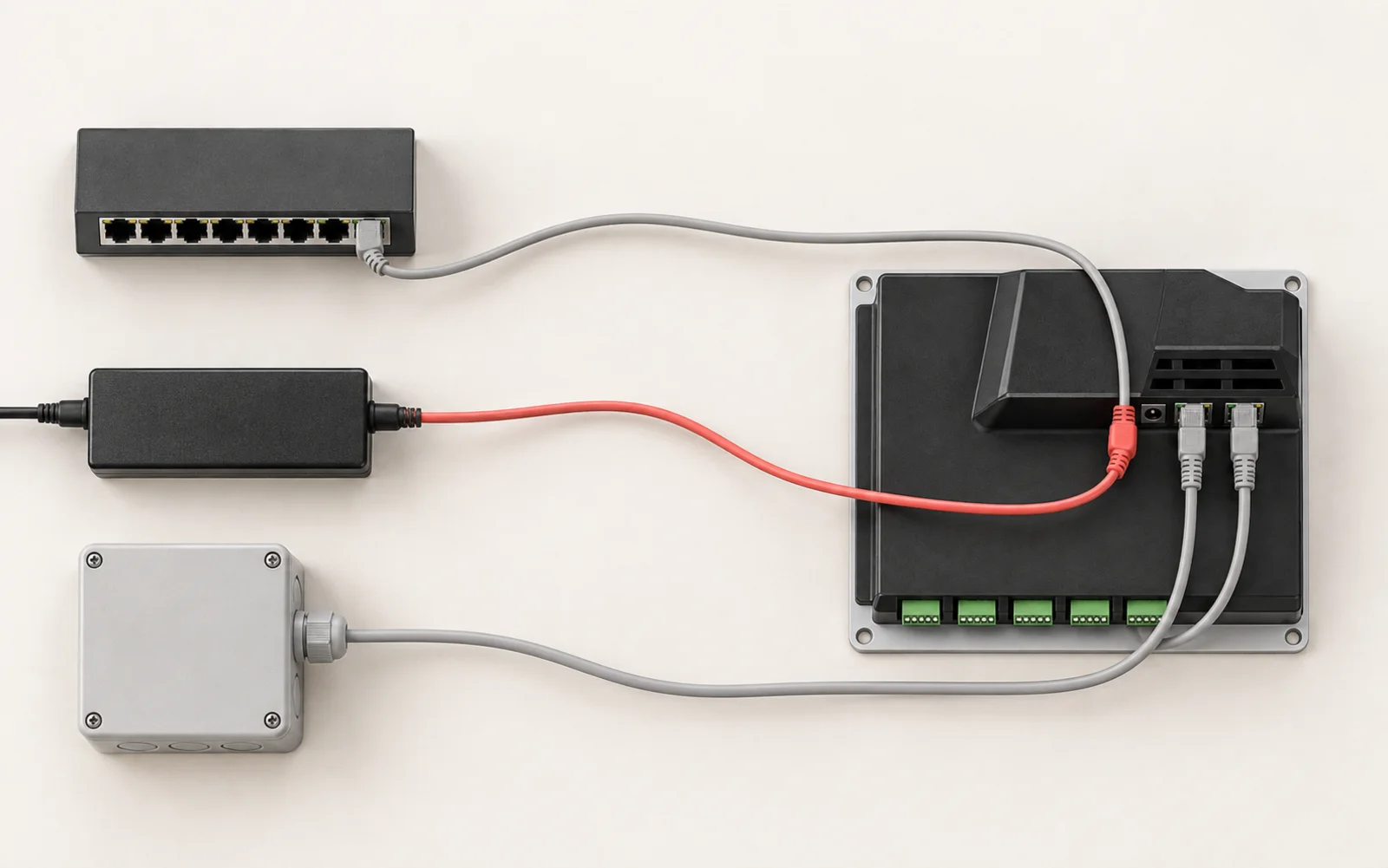
The Node runs from Power-over-Ethernet, a standard 48 V DC supply, or a Class 4 fault-managed-power receiver: one platform across every low-voltage power architecture.
The Cyber Shields Node brings power delivery, controls, automation and on-device AI together in one platform, configured to your ecosystem and never locked to ours.
The problem
Smart in pieces, rigid as a whole.
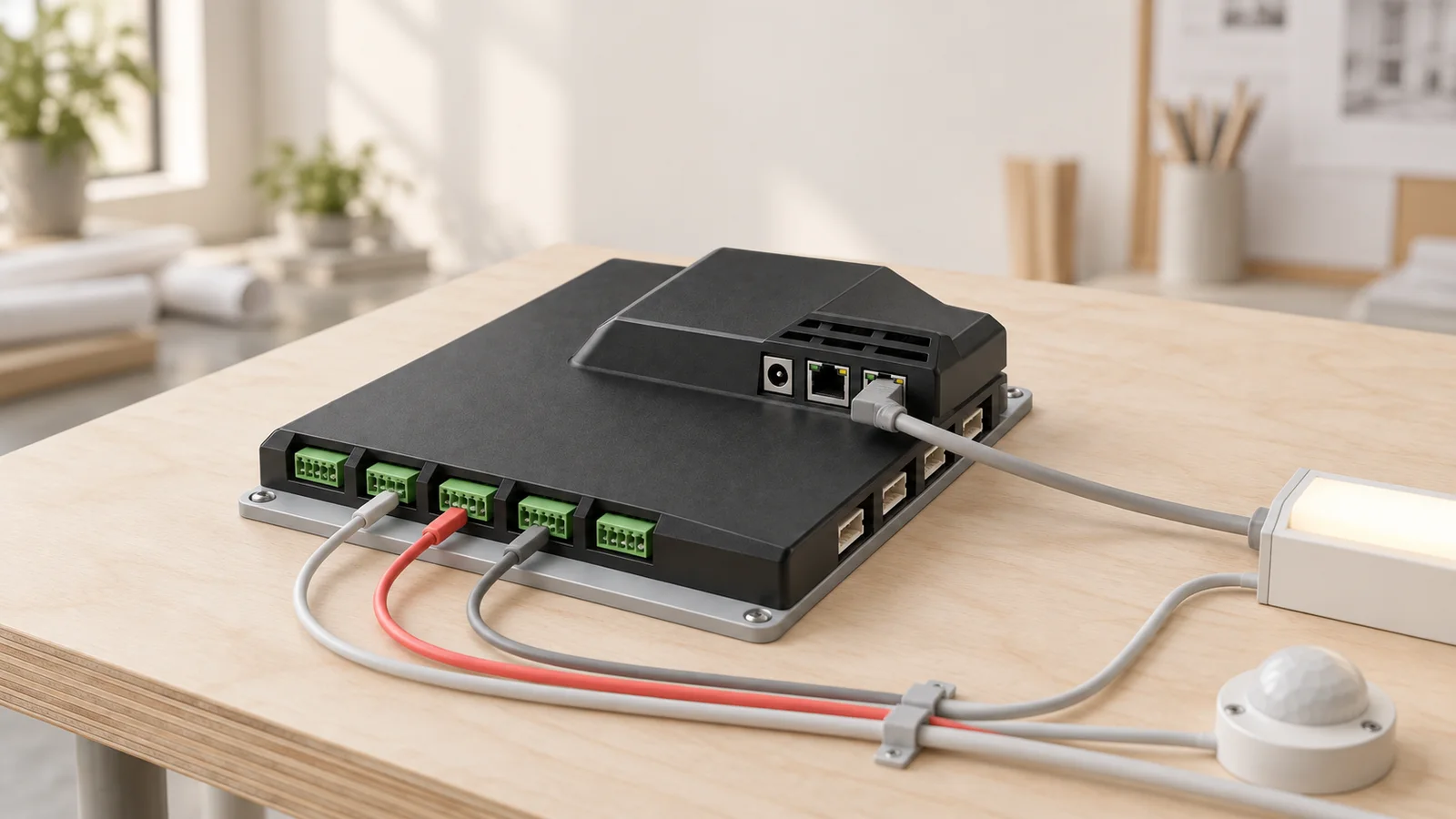
Smart-building products are sold one silo at a time. Lighting controls from one vendor, sensors from another, an access system from a third. Each comes with its own power supply, gateway and app, and each is replaced wholesale when the vendor changes course. The result is a building that is "smart" in pieces and rigid as a whole.
One platform
Five capabilities, one Node.
Unified power delivery
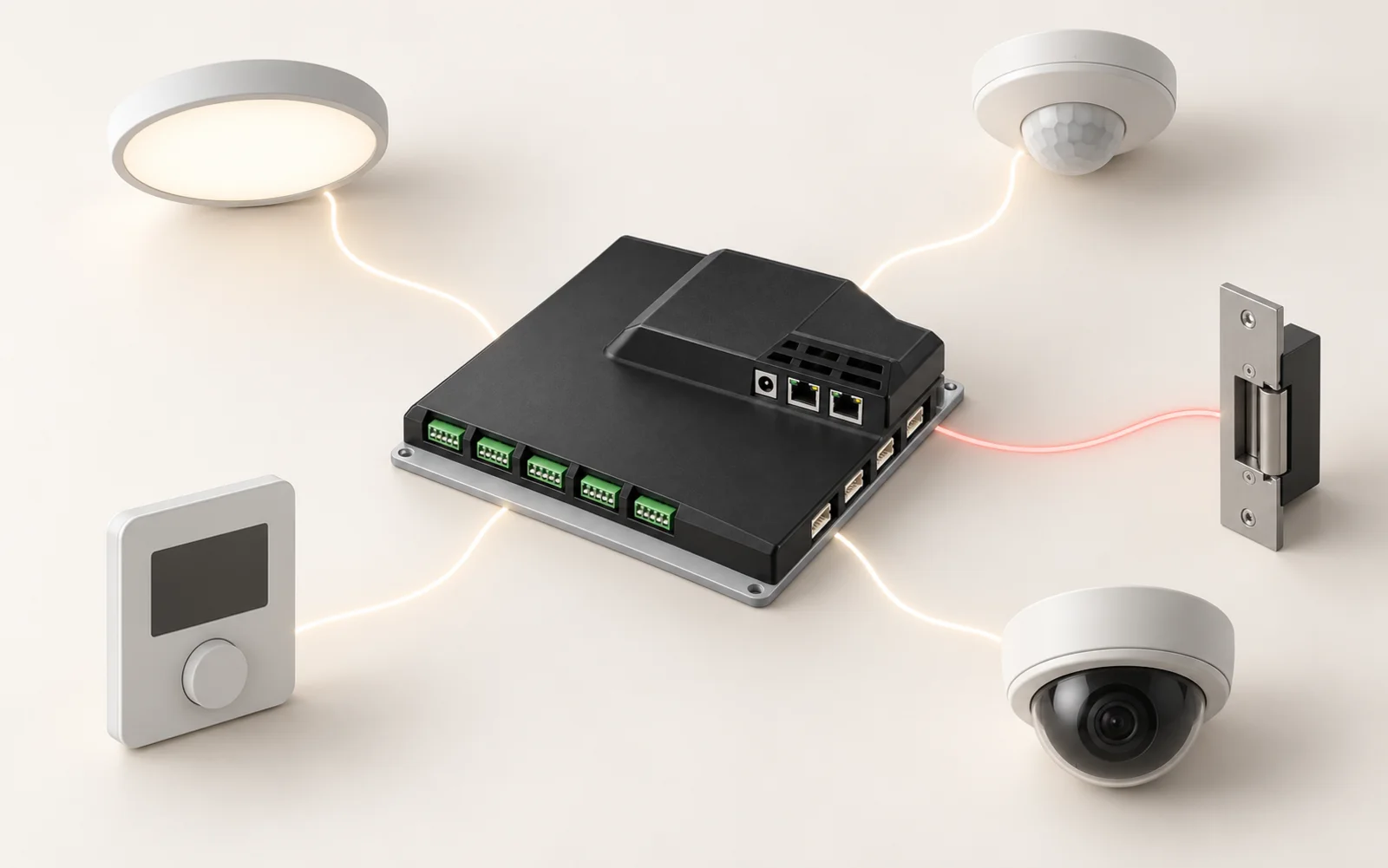
Software-configured power for the fixtures, sensors and controls connected to the Node. The platform matches how each supported device needs to be powered, so a light, a sensor and a door strike can share one hub.
Controls
Every connected fixture and sensor appears as a native Matter device, controllable from any Matter-compatible ecosystem.
Automation
Rules and schedules run on the Node itself. Local first; cloud optional and under your control.
AI at the edge
Occupancy, environmental and power data are analyzed on the device. Video is processed locally; only decisions need to leave.
Security
Device software is verified against a hardware root of trust before a port ever energizes: power itself is part of the security perimeter.
Open by design runs through all five. The Node is built on Matter, the open standard shared across the industry, so the platforms you choose today and the ones you choose next can all work with it. That interoperability is the point: it keeps you free of vendor lock-in.
Power-source agnostic
Power and control, on the DC that buildings already run on.
The Node powers and controls its devices on DC, which is what most of the devices in a building already need. It is designed to draw that power from the sources a building already has, whether Power over Ethernet, a dedicated DC supply or low-voltage distribution, within the Node’s supported input range. Choose the source that fits the site; the platform stays the same.
- Power over Ethernet
- Dedicated DC supplies
- Low-voltage building distribution
Open by design
Your ecosystem, not ours.
The Node speaks Matter, the open standard the major smart-building and smart-home ecosystems share. Whether or not you run a Matter ecosystem today, that shared language is what keeps you free: devices connected to the Node work with Matter-compatible controllers, apps and automations, and they keep working when you change them. No proprietary cloud, no forced app, no vendor lock-in.
How it works
From plug-in to insight.
Connect
Attach supported equipment, such as a light, a sensor, a switch or a strike, to the Node.
Configure
Set up the installation from the Cyber Shields app: what is connected, where it is, how it should behave.
Integrate
Bring the Node into the ecosystem you choose. Your devices appear there as standard devices.
Automate and observe
Build rules, watch telemetry, and let on-device AI tune the space over time.
Designed for
The devices a building actually has.
- Lighting and tunable white
- Occupancy and environmental sensors
- Access control: strikes, buttons, readers
- Cameras and edge vision
- Shades and small motorized loads
- Environmental monitoring: air quality, humidity, water
What a given installation supports depends on the equipment and its configuration.
Security posture
Built in, not bolted on.
The Node is designed around a hardware root of trust, is designed to run only verified software, and processes data on the device rather than in someone else’s cloud. Cloud connections are optional and under your control.
Where we are
Alpha hardware on the bench. Partners wanted.
Alpha hardware is in test with real fixtures, sensors and controls. Two U.S. patents have been allowed on the platform, with additional U.S. and international applications pending. Allowance means the U.S. Patent and Trademark Office has found the claims patentable; the patents issue once the final fees are paid. We are talking with building-technology partners, integrators and early pilot sites.